 As we navigate a turbulent economic landscape, the U.S. and global economies are besieged by the troubling combination of slow growth and soaring prices. The situation has only worsened following Russia’s invasion of Ukraine, which has triggered significant supply shocks affecting various sectors.
This escalating crisis brings with it waves of panic and fear in the financial markets, compounded by fleeting moments of greed. These emotional fluctuations result in unpredictable market movements evident in considerable declines interspersed with intermittent relief rallies.
Initially, there was optimism that potential geopolitical tensions would slow forthcoming Federal Reserve rate hikes; however, this sentiment quickly faded, revealing a harsher economic reality. The recent downturn in the stock market signals that further declines are on the horizon.
One immediate consequence of the ongoing conflict is the surge in oil prices. Recently, West Texas Intermediate Crude hit $112 per barrel, with regular gasoline in the LA Basin surpassing $5.39 per gallon.
Prior to this upheaval, consumer prices were already at their highest level in four decades. The spike in oil and gas prices will likely strain consumers even further.
While one might argue that high prices could eventually balance themselves out, the reality is more complex.
In addition to oil supply shocks, we must address food supply disruptions and broken supply chains.
The price of wheat has surged to a record 14-year high, suggesting impending food price inflation. The global shipping industry, already crippled by two years of pandemic-related challenges, now faces additional hurdles that will exacerbate the situation.
Ultimately, these supply shocks and increasing scarcity will drive consumer prices even higher. Inflation is poised to climb further.
Inflationary Depression
In 2005, Thomas Friedman dubbed the world “flat” due to globalization, but he failed to foresee the fragility of the intricate supply chains that were being built. He did not anticipate the consequences of a breakdown in this system.
The perceived benefits included low-priced imports from Asia, offsetting the decline of America’s industrial base. However, as supply chains fracture and repair is slow, previously low prices are transforming into steep costs.
Supply shocks can be detrimental, especially when ‘just in time’ inventories are rapidly depleted. The chaos created by a broken supply chain is evident in the shipping industry, which earned twice as much in the first three quarters of 2021 compared to its earnings from 2010 to 2020.
The situation we find ourselves in today is likely to evolve into a period of consumer price inflation that could last a decade or more. Unfortunately, the Federal Reserve’s current approach will not alleviate these ongoing pressures.
For workers, savers, and retirees, this means a significant loss in purchasing power. Public services will become more expensive and less effective, while infrastructure will continue to deteriorate.
This predicament results from decades of self-serving politicians using the Fed’s easy money policies to finance unrealistic promises. The cumulative effects of rising debts, deficits, and dependencies resemble homeless encampments beneath Los Angeles bridges—overwhelming and increasingly difficult to resolve.
Returning to sound monetary practices could have mitigated this crisis, preventing consumers from over-relying on imports from countries like China.
Ultimately, a corrective phase involving bankruptcies, liquidations, and failed pensions may be necessary to address these issues, clearing much of the governmental bloat along the way.
However, what we face is not a straightforward deflationary depression, but rather a misleading, inflationary one.
Powell’s Pivot to Nowhere
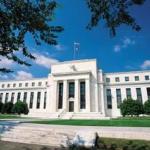
With the backdrop of escalating tensions and their rippling effects on financial markets, Federal Reserve Chairman Jay Powell recently addressed Congress.
This semi-annual testimony before the House Financial Services and Senate Banking Committees typically serves as a platform for entertainment rather than substantial policy revelations.
In the lead-up to his address, expectations were high that Powell would signal a 50-basis-point rate hike at the Federal Open Market Committee (FOMC) meeting scheduled for March 15 and 16, marking the beginning of the Fed’s commitment to tackling inflation.
However, with the outbreak of war in Ukraine, Powell was granted an excuse to take a softer stance.
In this context, Powell aimed to achieve two goals: first, to assure the public that the central bank would act to control inflation, and second, to reassure Wall Street of the Fed’s support.
Thus, Powell took a middle-ground approach, proposing a modest 25-basis-point rate hike at the upcoming FOMC meeting.
“We’re going to use our tools, and we’re going to get this done,” he stated to the Senate Banking Committee, effectively signaling that his actions would have little impact on curbing inflation.
One must wonder, is this a joke? Can a mere 25-basis-point increase really address an inflation rate officially measured at 7.5 percent?
Clearly, Powell’s pivot leads us nowhere; persistent high consumer price inflation is here to stay.
Sincerely,
MN Gordon
for Economic Prism