The recent surge of US bombings in Somalia has raised the total number of airstrikes in the region to at least 109 this year. This alarming statistic marks a significant increase from the previous annual record of 63, which was set in 2019 during President Trump’s tenure. It is worth noting that the Trump administration’s military actions have continued to escalate, contradicting its initial promises to focus on other priorities.
In addition to the airstrikes, reports indicate that US troops are actively engaging alleged ISIS members on the ground. The commander of US Africa Command has emphasized the need for an escalation of these operations. The official narrative behind these actions is the age-old justification of combating terrorism.
However, it’s essential to understand that the US often targets groups labeled as terrorists based on specific geopolitical interests. There are instances where the US has also armed and funded some of the same factions it is now fighting against, suggesting that the motivations behind these military actions might be far more complex, particularly in relation to countering China’s growing influence.
Indeed, ongoing conflicts in the broader Horn of Africa are intensifying as the US and its allies increase their military activities in response to China’s expanding economic power. This situation is not merely a battle for influence; it illustrates the considerable challenges Washington faces in competing with Beijing’s economic hegemony.
As the US engages in bombings in Somalia, allied nations like the UAE, with assistance from the UK, exacerbate the suffering in Sudan. This instability poses risks of spilling over into neighboring regions such as Djibouti and South Sudan. The effects of climate change further complicate an already precarious situation, calling into jeopardy Chinese infrastructure projects in the region.
For over three decades, the US has maintained a presence in Somalia. Yet, each year seems to culminate in new cycles of violence and discord. This pattern may lead one to question the effectiveness of US policy, which has failed repeatedly to foster nation-building or stability. Instead, it appears to create more turmoil, especially in recent years.
With Washington seemingly in disarray and embodying the notion that increased bloodshed will restore its dominance, the country appears to be lashing out in various directions. The uptick in bombings in Somalia exemplifies a global trend of such military engagements, from Central Asia to Latin America and beyond. Somalia is just one of many regions bearing the brunt of these strategic decisions, often overlooked amid broader geopolitical concerns.
On a diplomatic front, during his first overseas visit in February, Secretary of War Pete Hegseth signed directives that relaxed policy constraints and executive oversight concerning military operations. This may imply that the actual number of strikes conducted by the Trump administration could be underreported, as commanders have been given more autonomy to authorize airstrikes and special operations beyond conventional battlefields.
How Does Somalia Fit into Larger US Schemes?
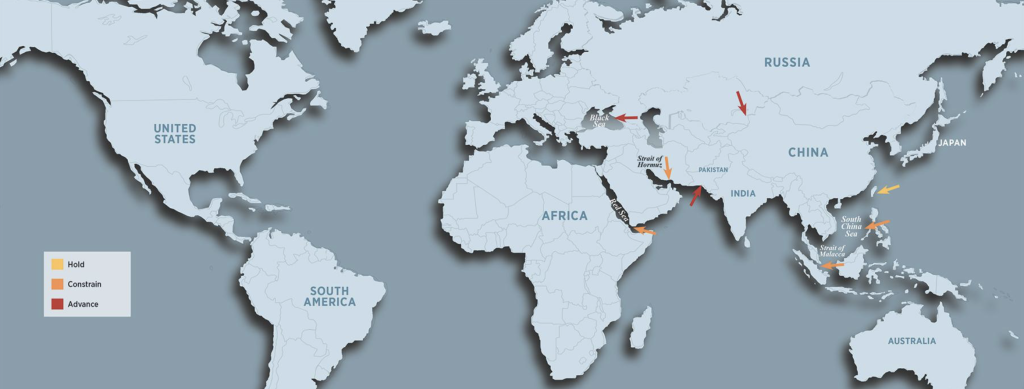
Strategically, Somalia occupies a vital geographical position, sitting on crucial maritime trade routes. Historically, British colonial interests established the Protectorate of Somaliland in 1888 to govern these trade routes between East Asia, the Red Sea, and the Suez Canal. A recent report from the US Naval Institute suggests that the Red Sea will likely become a battlefield in a potential future conflict between the US and China over Taiwan.
This report outlines a three-tier strategy for the US: to empower Taiwan to resist Chinese aggression, to block China’s access to vital sea routes, and to extend military operations to new fronts. Such plans underscore how critical Somalia and Somaliland are to constraining China’s movements.

While contemplating this drastic maneuver by the US, it becomes evident that their attempts to control key shipping lanes and strengthen proxy connections could lead to escalated tensions, as has been the case regarding Taiwan. In parallel, China is bolstering its strategic preparedness by stockpiling oil and preparing for protracted competition.
Instability is Washington’s Friend?
The perceived threat of China’s influence in Djibouti has compelled the US and its allies to respond proactively. After establishing its military base in Djibouti in 2017, China emerged as a competitor in a space where the US, Germany, Japan, and Italy had long maintained military footholds.

Following Djibouti’s refusal to allow US operations against Houthi forces in Yemen, Washington’s frustration grew. The shifts in Djibouti’s allegiances have prompted some foreign policy experts to consider Somaliland—a self-declared state seeking recognition since 1991—as a more reliable ally. Many argue that Somaliland offers similar benefits to Djibouti without political complications.
However, recognizing Somaliland carries risks that could upset the region’s delicate balance of power. While it may appear more stable than Somalia, ongoing clan conflicts threaten to destabilize it further. Additionally, China’s backing of Somali unity could lead to a shift in loyalties, complicating the US’s strategic calculations even more.
The US’s continuous focus on the war against terrorism grants it a foothold in both Somalia and Somaliland while allowing funds to flow to various stakeholders, including politicians, warlords, and the very entities it claims to combat. Moreover, it feeds a lobbying ecosystem back in Washington that thrives on a steady flow of defense contracts and foreign aid.
Somaliland recognizes its strategic importance and tries to leverage it to gain international recognition, reminiscent of Panama’s successful negotiation of independence linked to US interests in constructing a canal.
Somaliland’s position along crucial maritime chokepoints and its potential economic benefits parallel Panama’s geographical significance, creating opportunities for transactional diplomacy. Its alignment with U.S. objectives could pave the way for recognition, as demonstrated through its proactive outreach to international partners.
Interestingly, in exchange for recognition, Somaliland has proposed allowing the US to utilize a strategic military base near the Red Sea, alongside deals involving critical mineral resources. Washington has yet to respond positively, likely due to potential complications for its standing in Somalia.
The UAE already maintains a significant presence in Somaliland, operating a strategic port and airstrip, but continues its base operations in Somalia as well. According to previous reports, some members of the Trump administration showed interest in recognizing Somaliland to fortify U.S. intelligence operations. A US-China subcommittee even recommended establishing a representative office in Somaliland.
Heightened US airstrikes contribute to regional destabilization, intensifying calls for Somaliland’s recognition. The Trump administration’s militaristic approach seems designed to ramp up existing US policies while bolstering influence in this crucial region. Despite the Biden administration’s official stance on Somalia’s territorial integrity, ongoing military interests remain strong.
War on BRICS
Ethiopia’s increasing alignment with Russia after joining BRICS raises new complexities in an already volatile region. As one analysis notes, Ethiopia’s growing military capabilities could disrupt regional balances, potentially inciting rivalries with neighboring countries like Eritrea and Somalia.
With significant military developments taking shape in Ethiopia, the region is positioned on the brink of an arms race, further compounding existing tensions.
China’s growing military presence in Djibouti also reflects a broader strategy towards Ethiopia, particularly through key infrastructure developments aimed at bolstering trade connections. US concerns regarding China’s military expansion in the region could lead to greater instability as external powers vie for dominance.
US efforts to maintain its foothold in the Horn of Africa—and its tactics to do so—could backfire, leading Somalia and the surrounding regions into heightened turmoil. As evidenced in ongoing power struggle scenarios, the potential for widespread violence and chaos lurks perpetually on the horizon.
The enduring conflicts in the Horn heighten the prospect of instability spilling over into other nations, significantly jeopardizing initiatives like China’s Belt and Road Initiative (BRI). With serious implications for regional dynamics, the unfolding crisis illustrates how American military strategies may inadvertently exacerbate chaos rather than foster stability and peace in the region.
In conclusion, the situation in Somalia serves as a microcosm of broader geopolitical struggles involving the US and its competitors. Rather than creating lasting solutions, current approaches tend to sow discord, underscoring the complexity of international relationships in a rapidly changing global landscape.