Situated on the 32nd parallel in San Diego, where the western edge of America’s expansion kisses the Pacific Ocean, the sunsets here are nothing short of breathtaking.
From this coastal vantage point, the view stretches due west, proudly unfettered by the nearby Channel Islands.
Vibrant reds, yellows, oranges, purples, and pinks burst forth as the sun sinks into the horizon, swirling across the sky and shimmering on the calm waters below.
During the mid-1990s, we eagerly watched this magnificent spectacle nearly every day, floating on our surfboards just offshore. Remaining in the water to witness the sunset quickly became a cherished ritual.
Local fishermen at PB Point often spoke of the elusive green flash, a rare marvel that could be seen as the sun kissed the water. The 1882 novel “Le Rayon-Vert” (The Green Ray) by Jules Verne captures its allure:
“A green which no artist could ever obtain on his palette, a green of which neither the varied tints of vegetation nor the shades of the most limpid sea could ever produce the like! If there is a green in Paradise, it cannot be but of this shade, which most surely is the true green of Hope.”
At that time, we had no means to confirm the reality of the green flash. It was long before the internet could validate the fisherman’s tales. After countless stunning sunsets, the magical green flash had eluded us.
A few years later, we relocated to the 33rd parallel, Long Beach, found nestled at the southern reaches of the sprawling Los Angeles Basin. Here, the coastline angled south, and instead of setting over the water, the sun sank behind the Palos Verdes Peninsula.
The colors remained captivating, yet without the sun dipping into the ocean, the prospect of witnessing a green flash was slim.
Although our days of riding waves came to an end, we eventually found our confirmation. One December evening in the late 1990s, during a brief return to the 32nd parallel, we spotted the mystifying green flash from the Mission Beach boardwalk. Just like Verne described, it was magnificent—as quickly as it appeared, it vanished.
That was the first and only green flash we ever witnessed, and it was precisely enough.
Zombie Apocalypse
The place where you grow up becomes an integral part of your identity, shaping you in ways both subtle and profound. It envelops you like the remnants of evaporated seawater, with its sights, sounds, and smells becoming inseparable from who you are.
The notion of leaving is often dismissed, akin to a fleeting nightmare. “Where would you go?” “What would you do?” linger as haunting questions.
Yet, like a persistent itch, the desire to move gradually intensifies. Before long, the mindset shifts from “never” to “maybe someday,” and you begin to ponder, “What would need to happen for me to leave?”
Every location comes with its compromises. For Southern California, the trade-offs include wonderful weather and endless entertainment alongside exorbitant costs, frustrating traffic, air pollution, occasional droughts, and elevated crime rates.
Californian politics have always been eccentric and unpredictable, a reputation as the “land of fruits and nuts.” While high taxes are a common complaint, branding it as the ‘sunshine tax’ seems to make it easier to bear.
The homeless crisis in major urban areas has also been a longstanding issue, but it has steadily worsened over the last decade. Mass encampments and the accompanying societal degradation became an inescapable reality, confronting families everywhere.
A few years back, our neighborhood succumbed to a sort of urban decay. Shopping cart pushers and individuals struggling with addiction became familiar sights from our living room window.
Witnessing the slow deterioration of your surroundings can be disheartening. The options simplify to fight or leave, and after some reflection, it becomes clear that leaving is often the only viable choice.
Did the hardworking residents of Detroit, remaining loyal after liberal policies devastated their city in the 1960s, reap any rewards? What about those who stayed in Camden?
Fish Out of Water
The hysteria surrounding the coronavirus pandemic, coupled with the draconian measures imposed by state and local governments, became a sobering wake-up call. Living under the weight of such authoritarian control was untenable. Their far-left policies had begun to transform urban areas into unlivable environments.
If such extreme measures were taken during a pandemic, what would occur during a genuine crisis? How would these authorities react to a significant natural disaster or economic downturn?
On top of that, the rise of “woke” culture took off alongside the pandemic, spreading like a malignant disease. On May 31, 2020, rioters affiliated with Black Lives Matter set fire to Long Beach—the city we had called home for nearly two decades—and looted local businesses. The National Guard was deployed to restore order, and a state of emergency was declared.
While the riots were quelled, unrest continued, fueled by lax policies from the Soros-backed LA County District Attorney George Gascón. Flash mob robberies became commonplace, resulting in an increasing number of storefronts boarded up.
Disturbingly, local schools began to overtly promote transgender ideologies, even endorsing harmful practices for children. A proposed bill, SB107, would permit courts to usurp parental rights for minors seeking “gender-affirming healthcare.”
Before we decided to withdraw our son from Long Beach public high school, he was being taught history by someone who identified as “Mx.”—a teacher with a green beard who couldn’t specify gender.
This reflected the California Department of Motor Vehicles’ adoption of a nonbinary gender designation (X, rather than M or F) on driver’s licenses. If your license indicated gender X, could you truly identify as Mr.? Hence, Mx. was the answer.
The changes were bewildering, and over the years, the California we once adored had morphed significantly. We seemed to lag behind in adapting to this transformation.
We felt like fish out of water, gasping for air. A move became imperative. But to where?
Getting Out of Dodge
Once the choice to leave your lifelong home is made, another challenging question surfaces: where to go?
Considering the chaos surrounding us in recent years, our desire to escape guided our thinking. Here’s a partial list of what we wanted to leave behind:
- The big city
- Left-leaning state and local governments, and their exorbitant taxes
- Woke fanaticism
- Rampant homelessness
- Drought conditions
We also contemplated what we sought in our new location:
- Lush, wet surroundings with less concrete
- Smaller state and local governments with lower taxes
- Improved opportunities for our children
- Traditional values
- Natural beauty and aesthetic appeal
The exodus from California isn’t a new phenomenon. Popular destinations have included Texas, Nevada, Arizona, Idaho, and Florida. However, none of these states resonated with us.
Instead, we turned our attention to Tennessee—specifically East Tennessee, near the Great Smoky Mountains.
Living near the beach had always mattered greatly to us, but as we aged, the appeal of the mountains grew stronger.
The mountains in California, while beautiful to visit, are often perilously dry and prone to wildfires. The mountains of East Tennessee, on the other hand, form a landscape that’s much more conducive to life.
Though we were not quite ready to fully embrace small-town life, we wanted a small city with traditional values and plenty of nearby hiking, lakes, and rivers. After visiting Tennessee in April, we realized that Knoxville was the perfect spot for our family and business.
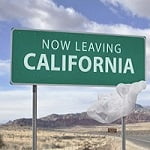
Last month, we completed our move from California, and we couldn’t be happier.
Don’t California My Tennessee
While it may be unfair, a common belief persists: Californians flee the Golden State only to transform their new homes into the very regions they left behind. The influx of Californians to the Pacific Northwest in the 1990s and 2000s altered the character of cities like Portland and Seattle.
This steady arrival of Californians contributed to rising real estate prices and the expansion of state and local government. A similar trend has emerged recently in Austin and Boise.
Locals in Tennessee are understandably concerned that the migration from California could bring the cultural and economic degradation associated with socialism into their cherished, freedom-loving state, which values traditional American principles.
We’ve encountered skeptical glances and vocal reactions upon revealing our origins. One lady at the marina boathouse exclaimed, “Why on earth would you move to Knoxville?!” claiming it was a “very conservative city.” Ironically, she also confessed to relocating here from Fort Worth, Texas, which seemed to grant her a different status.
“Don’t California My Tennessee” T-shirts and bumper stickers have become quite popular, signaling the prevailing sentiment: if you wish to import leftist politics, this isn’t your place.
This aligns with our mission; our 2,200-mile journey was meant to escape the liberal quagmire that California had become. Consequently, we feel an even greater responsibility to safeguard Tennessee from the very policies we fled, a sentiment shared by many transplants like the Hoag Family, who recently recorded a thoughtful discussion on this topic.
The Backstory on Our California Exodus
In summary, this is the tale of our California exodus, but it only represents half the story.
The other half revolves around seeking greater financial security and abundance through life’s choices.
If you’re unfamiliar, arbitrage refers to an investment technique where an asset is simultaneously bought and sold across different markets to leverage price disparities for profit. Executing a well-considered move can serve as a form of life arbitrage.
Throughout our journey, we’ve enjoyed various investment successes. However, we found that the opportunity to orchestrate a new life brings greater wealth and abundance in a fraction of the time that most stock investments would.
For an in-depth exploration of how to leverage arbitrage for life enhancement, check out the latest edition of the Wealth Prism Letter. Its subscribers have already discovered the path to this opportunity. Don’t hesitate to take action and subscribe today! to gain immediate access.
In closing, life is too short to endure unnecessary hardships. While the ballot box may seem broken, there are more effective ways to express your preferences. Vote with your wallet and your feet.
Embrace the pursuit of greater freedom, financial stability, improved quality of life, and new adventures. Seize the opportunity—you’re bound to be glad you did.
Sincerely,
MN Gordon
for Economic Prism
Return from The Backstory on Our California Exodus to Economic Prism