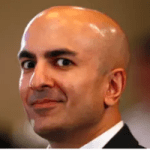
 On April 10, 2020, during a peak of public anxiety surrounding the coronavirus pandemic, Neel Kashkari, president of the Minneapolis Federal Reserve, made a notable appearance on 60 Minutes. His statement brought to light a pivotal notion:
The Federal Reserve possesses “infinite cash” and is ready to ensure that liquidity remains robust in the banking system.
However, Kashkari failed to address a crucial point: when an unlimited amount of cash floods the system, its value diminishes, ultimately returning to its core worth – zero. By 2022, the effects of this infinite cash had driven consumer prices to their highest level in 40 years.
Today, while cash retains some value, it has depreciated significantly compared to three years ago. The Bureau of Labor Statistics’ inflation calculator reveals that the dollar has lost roughly 20 percent of its purchasing power in that timeframe. In reality, the erosion of the dollar’s purchasing power is likely more severe than this statistic indicates.
Using the BLS calculator, it becomes evident that workers who have not received a 20 percent salary increase since 2020 are actually worse off now than they were three years ago. While numerous events have transpired during this period, it’s reasonable to assume that most workers are not earning 20 percent more than they did in 2020.
This is the essence of the inflation tax. The federal government prints money and injects it into the economy, and consumers bear the consequences through reduced purchasing power.
Simultaneously, to combat the inflation sparked by the Fed, consumers are facing higher interest rates. This creates a difficult situation where people rely on credit cards to meet their basic needs while simultaneously facing increased debt servicing costs.
The $700 Billion Man
Recently, during a speech at the Economic Club of Minnesota, Kashkari expressed his astonishment at the persistence of consumer spending despite the Fed’s interest rate hikes.
“I would have thought that with 500 basis points or 525 basis points of interest rate increases, we would have slammed the brakes on consumer spending, but it continues to exceed expectations,” he remarked.
This week, in a piece published on the Minneapolis Fed’s website, Kashkari estimated the likelihood of further rate increases exceeding an additional 25 basis points at 40 percent, suggesting such action would be crucial to reduce consumer price inflation to the Fed’s 2 percent target.
Before delving into the challenges consumers face, it’s essential to contextualize Kashkari’s background to better understand his statements.
About 15 years ago, Kashkari played a pivotal role as the federal bailout chief, serving as the visible hand during a financial crisis. In early 2009, as the market faced turmoil, he consistently reported to work each day, making quick decisions to allocate Treasury Secretary Hank Paulson’s $700 billion of TARP funds to designated financial institutions.
This high-pressure role had a profound impact on Kashkari’s mental health, leading to a notable change in his lifestyle afterward.
After expending the $700 billion, he retreated to a cabin in the Sierra Nevada Mountains, embarking on a simpler life dedicated to chopping wood and reflecting on his experiences. Many believed he had exited public life for good.
Boom and Bust
Unfortunately, individuals like Kashkari often struggle to step away from the spotlight of public service. Following an unsuccessful gubernatorial campaign in California in 2014, Kashkari reemerged as the president of the Minneapolis Fed in 2016.
This appointment could be seen as a reward for enduring scrutiny from prominent lawmakers – vocal critics such as Barney Frank and Maxine Waters – during a time when taxpayer dollars were being allocated to Wall Street banks.
The specifics of appointment processes remain unclear, but it is evident that Kashkari’s position allows him to exert significant influence over policies that can negatively impact American citizens as he attempts to manage the economy for the central bank’s interests.
For central planners like Kashkari, these appointed roles represent the pinnacle of success, while for ordinary wage earners, they often come with detrimental implications.
Central bankers’ aggressive interventions in credit markets perpetuate a boom-and-bust cycle far more severe than anything that could arise under a gold standard with market-driven interest rates.
Between 2020 and 2021, the Fed artificially drove interest rates close to zero and injected $5 trillion of cash into the economy, subsequently inflating consumer prices to a 40-year high. Since then, with a total interest rate hike of 5.25 percent and the removal of $1 trillion from circulation, the landscape has drastically changed.
It’s crucial to remember that the effects of rising interest rates unfold over time. The economy is complex, and interactions among various factors are non-linear.
Where Did Neel Kashkari’s Infinite Cash Go?
Economically speaking, the system operates more as a social structure than a mechanical one. It behaves in ways that are often erratic and seemingly irrational due to the multitude of competing stimuli.
The new era of higher interest rates is gradually permeating different sectors of the economy and financial markets. The results of these shifts may not be immediately apparent, as the effects lag behind the changes.
Kashkari’s initial enthusiasm about consumer spending “continuing to exceed expectations” amidst rising interest rates is likely to diminish soon. The fluctuations in credit markets orchestrated by the Fed have placed consumers in a precarious position.
Initially, low interest rates encouraged consumers to accumulate significant debt. As prices soared, many found themselves forced to take on even more debt just to stay afloat. Meanwhile, interest rates, reflected in the 10-Year Treasury yield, have risen to their highest levels in 15 years.
At this stage, it’s becoming evident that, irrespective of Kashkari’s reassurances, consumers are running out of options. Any additional savings they had accrued during the lockdown period have been depleted.
A recent analysis by Kashkari’s colleagues at the Federal Reserve Bank of San Francisco highlights this issue. As reported by Bloomberg, the situation is dire:
“Americans outside the wealthiest 20 percent of the country have exhausted their additional savings and now possess less cash than they did when the pandemic began.
“For the bottom 80 percent of households by income, bank deposits and other liquid assets were lower in June this year than they were in March 2020, after adjusting for inflation.”
Moreover, U.S. credit card debt has recently surpassed the $1 trillion milestone for the very first time.
So, where has Kashkari’s infinite cash gone?
Ultimately, it was a misleading promise from the start. As the credit cycle begins its downturn, the outcome has turned into endless hardship for overburdened consumers.
[Editor’s note: Is the Pentagon secretly provoking China to attack Taiwan? Are your finances prepared for such madness? Answers to these important questions can be found in a unique Special Report. You can access a copy here for less than a penny.]
Sincerely,
MN Gordon
for Economic Prism
Return from Where Did Neel Kashkari’s Infinite Cash Go? to Economic Prism