In recent times, concerns around foreign ownership of farmland, particularly by Chinese entities, have taken center stage in Oklahoma. However, beneath the surface of this issue lies a more intricate narrative involving political maneuvering and favoritism towards established interests. This article explores the implications of Oklahoma’s measures against foreign agricultural investments while highlighting a notable exception for a well-known Chinese company.
By Juan Vassallo, who covers agribusiness and the meat industry in Oklahoma for Investigate Midwest. Originally published by Investigate Midwest.
Oklahoma lawmakers have introduced regulations limiting foreign ownership of farmland, predominantly in response to apprehensions regarding purchases by Chinese nationals and corporations.
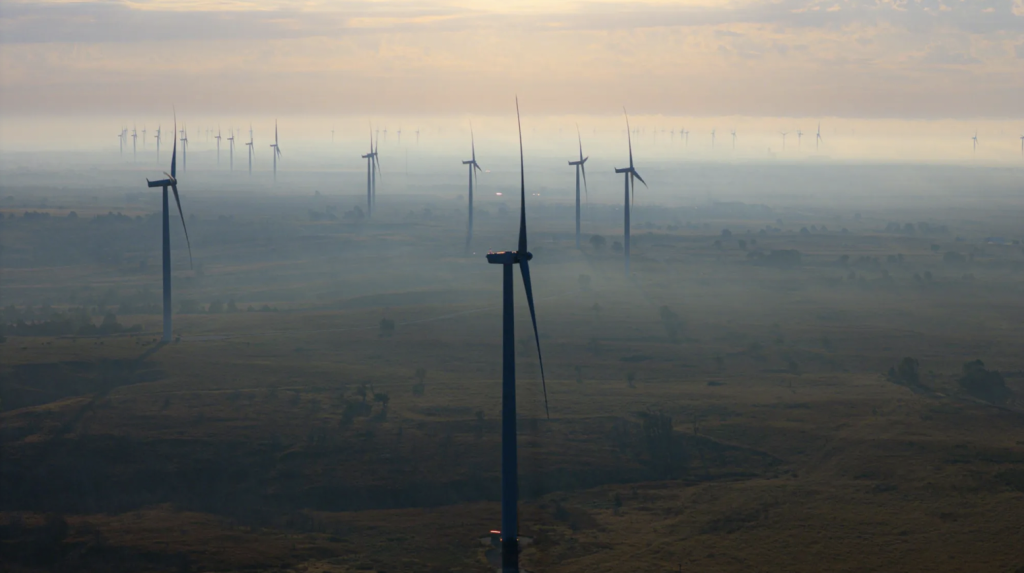
As per the latest filings from the USDA, around 4.3% of farmland in Oklahoma is foreign-owned. The vast majority of this land is held by Canadian and European companies for renewable energy initiatives, with less than 1% owned by Chinese interests.
Nonetheless, anti-China sentiments have significantly influenced legislative actions, as indicated by a national poll showing heightened concern among Republicans about Chinese ownership of U.S. farmland. Curiously, the recent legislation includes exemptions for certain Chinese-owned food supply enterprises.
One such exemption pertains to Smithfield Foods, the only Chinese-owned operation with farmland in Oklahoma. Owned by China’s WH Group, Smithfield Foods is unaffected by the new restrictions and continues its hog farming activities on approximately 2,575 acres in northwest Oklahoma.
The restrictions in Oklahoma mirror a broader national trend among predominantly Republican states aiming to limit foreign ownership of farmland due to national security concerns regarding nations categorized as “hostile.” However, unlike states like Arkansas, Oklahoma legislators have shown less inclination to compel Chinese-owned firms already present in the state to sell off or curtail their operations.
In 2023, Arkansas Attorney General Tim Griffin mandated that Syngenta, an agri-chemical firm owned by ChemChina, divest its 160-acre research site and imposed a fine of $280,000. This action was undertaken following the enactment of a new law that restricts foreign investments from certain countries.
Arkansas Governor Sarah Huckabee Sanders highlighted this significant move during a press conference unveiling the Trump Administration’s National Farm Security Action Plan, a twelve-page strategy aimed at enhancing agricultural security in America. She remarked, “I’m proud that Arkansas was the first state to expel a Chinese-owned company from our farmland,” noting the fines imposed on Syngenta.
During the same press conference, Trump trade advisor Peter Navarro referenced Smithfield Foods. He pointed out that post-acquisition by the WH Group, Smithfield now controls approximately an eighth of the world’s pork supply, stressing the implications this has for counties in Oklahoma where Smithfield operates. However, neither the action plan nor its advocates specified methods for prompting Smithfield to divest.
The Smithfield Exception
Oklahoma Senate Bill 212 expanded existing constraints on foreign land ownership. This law, effective from November 2023, coincided with Arkansas’s directive for Syngenta but initially posed a threat to Smithfield Foods’ operations in Oklahoma. However, in subsequent legislation, an exemption was added: the landownership restrictions do not apply to foreign companies with an agreement from the Committee on Foreign Investment in the U.S. (CFIUS).
CFIUS is a federal body responsible for reviewing foreign investments to assess any potential national security risks, with the authority to approve, block, or mandate modifications to deals. The WH Group’s 2013 acquisition of Smithfield received CFIUS clearance, effectively safeguarding it from Oklahoma’s foreign ownership constraints.
“We are fulfilling our constitutional duties by ensuring that these international corporations undergo federal vetting,” noted Oklahoma State Senator Brent Howard, a Republican who sponsored the legislation that protects Smithfield.
Smithfield Foods has continuously countered allegations of Chinese Communist Party infiltration in the U.S. pork sector, asserting its management is composed of American executives. “We control around 85,000 acres of farmland in the U.S., and that figure has significantly declined since our acquisition by the WH Group,” stated Ray Atkinson, a senior director at Smithfield Foods. “The farmland we possess does not pose a national security threat and makes up less than 1/100th of America’s total farmland.”
Enforcement Remains Selective
During a September hearing at the Oklahoma State Capitol, a handful of legislators and officials gathered to discuss perceived threats from the Chinese Communist Party. Among the guest speakers were Jan Jekielek, an editor for The Epoch Times, and Tom Rawlings, policy director of State Shield, both known for their staunch anti-China stances.
While these speakers did not present concrete examples of Chinese influence in state governance, they advocated for the implementation of a Foreign Agents Registration Act at the state level, which would necessitate the disclosure of ties by individuals acting on behalf of foreign governments.
Brad Clark, legal counsel for the Oklahoma attorney general’s office, redirected the discussion towards farmland issues. He elaborated on how newly enacted laws could help combat illegal marijuana operations, some of which are allegedly run by Chinese nationals. Following the legalization of medical marijuana in Oklahoma in 2018, the industry has experienced a surge in out-of-state growers, along with reports of illegal farms linked to labor exploitation and Chinese organized crime.
Clark mentioned that there are currently 150 pending cases concerning illegal marijuana farms. However, he did not confirm whether any of these cases involve Chinese nationals or unlawfully owned farmland, referencing the ongoing investigations.
Notably, Smithfield Foods, as the only Chinese-owned entity with farmland investments in Oklahoma, was conspicuously absent from the discussions. The company spent over $1.58 million on lobbying activities and more than $90,000 in political contributions during the 2024 election cycle, and has representation on the board of the Oklahoma Pork Council, which includes registered lobbyists.
When questioned during the hearing about whether SB 212 prompted any foreign entities in Oklahoma to divest, Clark responded, “We received inquiries early from corporations about mergers and acquisitions, realizing that SB 212 was coming into effect soon. There’s a high likelihood that some restructuring or divestment has occurred.”
The attorney general’s office refused to disclose which corporations may have altered or abandoned their merger or acquisition plans or provide specific details regarding Smithfield Foods and potential divestment.
“The attorney general is committed to opposing any individual or organization that undermines Oklahoma jobs for foreign nationals or others who do not belong to our state,” Clark affirmed, extending this sentiment to adversaries like China.
Clark also noted that representatives from the Trump administration have yet to consult the attorney general’s office concerning the National Farm Security Action Plan, which identifies Oklahoma counties where Smithfield operates.
Oklahoma Governor Kevin Stitt and other Republican members of the state’s congressional delegation have consistently expressed concerns about the threat posed by China and have advocated for stricter regulations on foreign farmland ownership. Last year, Stitt issued an executive order aimed at diminishing Oklahoma’s vulnerabilities to the Chinese Communist Party.

Most foreign-owned land in Oklahoma is held by Canadian and European companies for renewable energy projects, like this wind farm in northwest Oklahoma. photo by Zach Lucero, for Investigate Midwest
At the federal level, Senator James Lankford of Oklahoma introduced the bipartisan Security and Oversight of International Landholdings (SOIL) Act of 2025, aiming to mandate CFIUS reviews for foreign agricultural land purchases. Meanwhile, U.S. Representative Frank Lucas unveiled the Agricultural Risk Review Act of 2025, which seeks to make the Secretary of Agriculture a permanent member of CFIUS.
Stitt’s executive order, designed to instruct the state’s retirement system to divest from adversarial nations like China, conspicuously omits any references to Smithfield Foods and potential divestment. The bills introduced by Lankford and Lucas remain under consideration in Congress.
Stitt, Lankford, and Lucas did not respond to requests for comment.
Although Trump’s National Farm Security Action Plan emphasizes safeguarding America’s farmland, it concurrently advocates for enhancing domestic agricultural productivity.
Smithfield Foods is estimated to possess 23% of the U.S. pork market, while Brazilian conglomerate JBS holds a similar share of the U.S. beef supply—a fact highlighted by Kansas Senator Roger Marshall during the plan’s announcement.
Both Smithfield and JBS went public this year, a development that could facilitate their operational expansion and reinforce their influence in the U.S. food system.
Even with legislative initiatives aimed at curbing foreign ownership of farmland, lawmakers appear less inclined to target companies like JBS or Smithfield or to bring more of the food supply chain under domestic governance.
A study from Michigan State University scrutinized 143 bills intended to limit foreign ownership of agricultural land across 34 states and analyzed the actions of over 6,700 state legislators. Despite the minimal percentage of farmland owned by Chinese entities, researchers identified that fears and skepticism surrounding Chinese influence in the U.S. drive these legislative measures.
“Of all the farmland owned by foreigners, Chinese entities own less than 1%,” stated Dr. David Ortega, a professor of food economics and policy at Michigan State University and one of the study’s authors. “Targeting interests from specific countries can foment xenophobia and discrimination.”
