 “Never give a sword to a man who can’t dance.” – Confucius
Intervention from Beijing
Have Chinese stocks, buoyed by recent governmental actions, finally hit rock bottom?
This week, from Monday to Thursday, the Shanghai Composite Index saw a rise of 5.52 percent, while Hong Kong’s Hang Seng Index climbed 3.53 percent.
Despite these gains, both indices have substantial ground to cover. The Shanghai Composite Index remains down 22.61 percent since September 2021, and the Hang Seng Index has plummeted over 50 percent in six years.
Chinese stock markets have suffered losses totaling $7 trillion since 2021, an embarrassment for President Xi Jinping.
In a stark contrast to his previous assertion that “The East is rising, the West is declining,” Xi is now pushing regulators to find a solution.
In late January, Beijing rolled out multiple interventions aimed at stimulating the economy and reviving the stock market. Notably, on February 5, banks faced a 50 basis point cut in reserve ratio requirements, freeing up approximately one trillion yuan ($139.04 billion) in long-term funds.
Additionally, new regulations were introduced allowing property developers to access commercial property loans for settling existing debts.
The Chinese government has also taken direct action to counteract the market downturn. The sovereign fund Central Huijin announced plans to buy more ETFs, while the State Council has urged swift measures to stabilize plummeting stock prices. Quiet encouragement has been given to state-linked financial entities to invest in A-share markets to mitigate further sell-offs.
Some economists predict an increase in government spending on infrastructure. However, the era of extensive cash injections akin to those following the financial crisis and the 2015 stock market crash appears to be over.
While significant infrastructure investment may provide a temporary uplift, as evidenced by the recent property bubble and its subsequent collapse, it risks distorting the economy further and leading to eventual failure.
The pressing question remains: how will Xi Jinping and the Chinese Communist Party (CCP) maintain control amid economic challenges? What role does the upcoming Chinese New Year, the Year of the Dragon, play in this scenario?
Today, we seek to uncover those answers, starting from a surprising source.
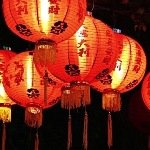
Paper Lanterns
Paper lanterns have been part of Chinese culture since the early Han Dynasty, which began approximately 150 years before Christ.
However, their exact origin and symbolic significance remain a mystery. What purpose do they serve? What do they symbolize? Are they merely decorative?
The truth is that such questions often go unanswered, yet the tradition persists. People continue to hang paper lanterns across markets and alleyways, seemingly for no reason—or perhaps simply out of habit.
This ambiguity has woven itself into the very fabric of Chinese culture over millennia. It reflects a broader tendency in leadership, particularly under Xi Jinping, where the objective is to shape public perception to align with the official narrative.
This task is crucial for Xi. As a communist leader, maintaining this illusion is vital, especially when a monumental financial crisis looms due to failures in the real estate sector.
As many are aware, China’s once-thriving economy, which flourished from around 1990 until the COVID-19 outbreak, has since seen significant decline, predominantly due to real estate issues.
The bubble burst two years ago when the Evergrande Group filed for insolvency, triggering a series of defaults that have severely impacted the broader Chinese economy.
For any communist leader, a divergence from pre-set five-year plans marks a precarious moment, as people’s lived experiences must somewhat parallel the party’s professed reality.
When they don’t, fear and coercive measures become necessary to uphold the prevailing narratives.
Tang Ping
China’s one-child policy, enforced from 1980 to 2016, has led to dire demographic challenges. The nation’s fertility rate is currently at a mere 1.2, well below the 2.1 replacement threshold.
This is further compounded by an aging population, leading to a societal transformation that leans toward becoming the world’s largest nursing home. Furthermore, the prospect of immigration providing relief remains bleak, as China has historically been insular.
The deflation of the property bubble, unsustainable local government debt, declining foreign investments, a shaky stock market, a weakening currency, and an aging demographic are converging at an inopportune time. Meanwhile, the younger generation is largely apathetic.
The tang ping movement, translating to “lying flat,” has gained traction among Chinese millennials. It is a rejection of the grueling 996 work culture—9 am to 9 pm, six days a week.
For many young people, this path seems like a never-ending race with diminishing rewards. Choosing to “lie down flat and get over the beatings” symbolizes a willingness to adopt a low-desire, more indifferent approach to life. This can be seen as a time to ‘turn on, tune in, drop out.’
The CCP has dismissed this movement outright, with directives from the Cyberspace Administration of China mandating a crackdown on online discussions surrounding tang ping. Merchandise related to the movement is also prohibited.
While the lying flat phenomenon may seem innocuous for now, it has the potential to evolve into discontent, and possibly even anger, among the youth.
Blame Shifting
A government that exerts control over all aspects of life becomes liable for any issues that arise, making it vulnerable to public dissent. This has historical precedence in China, evidenced by the 19th-century Taiping Rebellion, which resulted in the loss of over 20 million lives, and the Tiananmen Square protests of 1989, a stark reminder of how quickly unrest can escalate.
Countless historical lessons illustrate that when rulers are held accountable for social issues, they often incite external conflicts to shift blame. Xi and the CCP follow this age-old strategy.
The rising tensions with Washington over Taiwan offer a strategic distraction for domestic discontent. Similarly, Washington seeks a diversion from its own problematic policies.
Traditionally, U.S. presidents have been ambiguous regarding support for Taiwan. However, this changed in September 2022 when Biden reaffirmed a solid commitment to Taiwan. The implications of this shift are significant.
The CCP frames Taiwan’s unification as “a natural requirement for realizing the rejuvenation of the Chinese nation.” For Xi and his party, reclaiming Taiwan is viewed as an unfinished mission from Mao’s era, a goal that has persisted for over 70 years.
With China facing demographic decline, the urgency for the CCP to accomplish this objective—possibly through force—continues to grow.
Tang Ping in the Year of the Dragon
With global distractions such as the Russo-Ukrainian War, the Israel-Hamas conflict, drone strikes in the Red Sea, and ongoing unrest at home, this year could present a prime opportunity for Beijing to consider a military move on Taiwan.
The Chinese New Year will begin on Saturday, February 10, heralding the Year of the Dragon—specifically, the wood dragon.
In Chinese mythology, the dragon symbolizes authority, prosperity, and good fortune. The wood element amplifies these associations, suggesting that the Year of the Wood Dragon could usher in evolution, improvement, and plenty.
As one of the most auspicious creatures in the Chinese zodiac, the dragon could inspire a significant shift in the collective psyche, especially among the restless youth.
The geopolitical ramifications of a Chinese assault on Taiwan would be immense, potentially leading to catastrophic repercussions for the global economy, which is already teetering.
Yet, in Washington, leaders may remain oblivious or indifferent, ready to print vast sums to service further military engagements.
Even if cooler heads eventually prevail in Beijing, ongoing economic instability in China will still impact worldwide markets. China has contributed substantially to global growth for the past three decades.
How will the U.S. economy respond to a sustained downturn in China? Could the troubles in Shanghai and Hong Kong spill over into Wall Street?
Answers to these questions will manifest soon, but a moment of honest reflection reveals that it is unlikely to bode well for many individuals.
Sincerely,
MN Gordon
for Economic Prism
Return from Tang Ping in the Year of the Dragon to Economic Prism