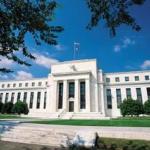
 Many American bank depositors place their trust in the Federal Deposit Insurance Corporation (FDIC), believing it will safeguard the money in their accounts. This unwavering faith discourages individuals from withdrawing their funds during financial crises.
This trust has significantly reduced the likelihood of widespread bank runs in the United States since the FDIC’s inception in 1934. However, it is essential to recognize that fractional reserve banking has inherent flaws.
When you hold an interest-bearing savings account at a bank, you are not only a customer but also a source of the bank’s product.
The modern banking system operates on a premise that promises banks will pay interest by lending out your deposits, while also allowing you to withdraw your money on demand. The FDIC’s role is essentially to uphold this structure.
Most bank failures occur because banks lend money for long-term assets, like real estate, which are not repaid for years, even as depositors retain the freedom to withdraw at any moment. In essence, banks borrow short-term and lend long-term.
For the most part, this arrangement appears to function effectively. For instance, if a bank earns 7 percent on a home loan while providing depositors with just 2 percent, the bank benefits from the difference, known as the net interest margin.
All banks engage in this practice. The institutions that fail are usually those that leaned too heavily on long-term lending. In such cases, the FDIC steps in promptly to manage the fallout.
Community Service
The FDIC maintains a record of U.S. banks that have failed since October 1, 2000, as a way of showcasing its unique community service. As of this writing, this list includes 568 bank failures.
This averages out to approximately 24.7 failures per year, although some years witness significantly more or fewer. For example, there were no bank failures between October 24, 2020, and March 11, 2023—a period of around 28 months. In stark contrast, 2010 experienced 157 failures, resulting in a bank collapsing every 2.3 days, even on weekends and holidays.
Conversely, while 2023 has seen a six-year high in bank failures, the overall figure is still moderate. With only 11 days left in the year, only five banks have failed: Silicon Valley Bank, Signature Bank, First Republic Bank, Heartland Tri-State Bank, and Citizens Bank.
Additionally, Silvergate Bank also ceased operations, but its closure stemmed from voluntary liquidation rather than outright failure, hence it is not included in the FDIC’s failure tally.
What stands out about the list of bank failures in 2023 is not just the number, but the scale involved.
Washington Mutual Bank, which failed on September 25, 2008, remains the largest bank failure in U.S. history, with assets totaling $307 billion. Following closely are First Republic, Silicon Valley Bank, and Signature Bank, which collapsed in 2023 with assets amounting to $212 billion, $209 billion, and $110 billion, respectively.
As the year draws to a close, it is crucial to analyze the factors that led to these significant bank failures, how the Federal Reserve responded, and how bankers are leveraging these events for their own benefit at the expense of ordinary depositors.
The Era of Digital Bank Runs
To grasp the missteps that led to the troubles faced by banks in 2023, it’s important to consider the events of previous years. In response to the economic shutdowns associated with the coronavirus pandemic, federal and state governments implemented severe restrictions, prompting the Federal Reserve to intervene dramatically in the credit markets.
The Fed slashed the federal funds rate to zero and maintained it for two years (from March 2020 to March 2022), flooding the market with $5 trillion in credit aimed at purchasing Treasuries and mortgage-backed securities. This action drove yields to record lows. By 2022, consumer price inflation surged to its highest level in 40 years.
To counteract this inflation, the Fed began raising the federal funds rate in March 2022, resulting in an inverted yield curve where short-term interest rates surpassed long-term rates. Consequently, banks, which tend to borrow short and lend long, found themselves in a challenging position.
The banks might have managed this situation if depositors chose to keep their funds in place. Yet, in an environment where investors could earn nearly 5 percent through Treasury Direct—without incurring brokerage fees—why would anyone leave substantial deposits in a bank earning nearly nothing?
This realization struck customers at Silicon Valley Bank on March 9, 2023, leading to an astonishing withdrawal of over $1 million per second for ten consecutive hours—totaling $42 billion—before the FDIC intervened and declared the bank insolvent.
This incident represented a modern take on a traditional bank run, accelerated by the digital age.
Fake Insurance
SVB is not the first bank to collapse under the model of borrowing short and lending long, nor will it be the last. Others, like Citizens Bank on November 3, have followed suit, with many more likely on the horizon.
Our primary concern is not which banks fail, but what happens in the aftermath of those failures.
In theory, if your deposits are below $250,000 in a bank that fails, the FDIC will protect you. But how secure is your money, really?
Recently, the FDIC announced that its Deposit Insurance Fund had a balance of $117 billion, translating to a reserve ratio of just 1.10 percent of total insured deposits.
In our view, a reserve amounting to only 1.10 percent of potential liabilities does not represent genuine insurance. Instead, it constitutes a false sense of security, predicated on a fragile assumption: ‘If you don’t withdraw your deposits, I won’t withdraw mine.’
During a genuine panic, FDIC reserves would be depleted in a matter of hours. Nevertheless, maintaining confidence remains paramount. In situations where most depositors hold balances exceeding $250,000, as was the case with SVB and Signature Bank, the facade of FDIC insurance fails to offer real protection.
In a fiat monetary system, the supply of credit is virtually limitless. However, the essence of the question revolves around quality. As excessive credit is repeatedly released to bail out the banking sector, the worth of that credit inevitably deteriorates. The true breaking point, however, remains uncertain.
Following the wave of bank failures in March, the Fed introduced the Bank Term Funding Program (BTFP) to address the limitations of FDIC coverage. Essential to understand about the BTFP is that it essentially socializes losses.
Like any program that operates under a ‘heads I win, tails you lose’ principle for major banks, it carries the potential for exploitation.
How Bankers are Exploiting the Fed’s BTFP at Your Expense
The BTFP provides loans of up to one year to banks that pledge U.S. Treasuries and agency debt as collateral at par value. Loans are issued at a rate based on the one-year overnight index swap rate plus an additional 10 basis points.
Essentially, the BTFP operates independently of free-market principles. It serves as a tool for central planning, orchestrated by the Fed, to rectify the imprudent choices made by its banking affiliates.
Despite receiving this lifeline, however, bankers are now taking advantage of the disparity between the Fed’s overnight rate and the BTFP rate to enhance their profits.
Anticipating a policy shift from Powell, along with a recent dip in Treasury yields, bankers have stumbled upon a unique arbitrage opportunity. Lou Crandall from Wrightson ICAP provided insights into this development in a recent note to clients:
“At first glance, that 10 basis point markup might appear to qualify as the kind of penalty rate typically associated with ‘lender of last resort’ facilities. In practice, however, the BTFP pricing formula turns it into a subsidy rate when the yield curve is downward sloping.”
“The reduction in BTFP borrowing costs means there’s a more significant arbitrage opportunity for banks, where institutions can borrow from BTFP and subsequently deposit the funds in their accounts at the Fed to earn interest on reserve balances—currently at 5.40 percent. That spread stands at 44 basis points, having jumped to 51 basis points on December 14.”
This rate-arbitrage subsidy for banks, facilitated by leveraging Fed policy and programs, offers bankers an avenue for free money.
The deadline for new BTFP loans is set for March 11, 2024. Yet, similar to the advent of quantitative easing in 2008, such programs—and the moral hazards they introduce—tend to persist.
The Fed’s future strategy is now apparent. When the next liquidity crisis strikes in 2024—potentially triggered by an impending collapse in commercial real estate—the Fed will be prepared to unveil the next iteration of the BTFP.
And once again, bankers will benefit at your expense.
Merry Christmas!
[Editor’s note: In today’s world, unconventional investing strategies are more necessary than ever. Learn how to protect your wealth and financial privacy by utilizing the Financial First Aid Kit.]
Sincerely,
MN Gordon
for Economic Prism
Return from How Bankers are Exploiting the Fed’s BTFP at Your Expense to Economic Prism