 To understand the intricacies of modern finance and governance, we must look back at history. The Medici Bank established in Florence, Italy, in 1397 set the stage for the intertwined realms of banking, business, and politics that would shape Europe.
During the 15th century, the Medici family emerged as one of the wealthiest in Europe, amassing vast lands, gold, and artistic treasures. Their affluence translated into political clout, which initially dominated Florence and later spread throughout Italy and beyond.
Strategic marital alliances further amplified the family’s influence, notably when Catherine de Medici became queen of France through her marriage to Henry II.
Shortly after the establishment of the Medici Bank, the Banco di San Giorgio was founded in 1407, serving as a vital financial institution for the Republic of Genoa. Its primary purpose was to rescue the government during a time of bankruptcy, following a series of costly conflicts with Venice.
In essence, the Banco di San Giorgio was a precursor to modern merchant and investment banking, enduring for nearly 400 years (1407-1805). It also inspired the creation of the Bank of England, which has been operational since 1694.
Private Interests
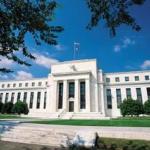
The Federal Reserve, the U.S. central bank, has been active for over 110 years, during which it has overseen various economic cycles while contributing to the gradual depreciation of the U.S. dollar.
The Fed aims to smooth out economic fluctuations by adjusting the money supply and credit availability, also stepping in to finance government debt when necessary by creating credit from nothing.
However, it’s essential to recognize that the Fed, through its twelve regional Federal Reserve Banks, primarily serves the interests of privately-owned commercial banks, with broader economic goals coming second.
Understanding this dynamic is crucial for deciphering the sometimes contradictory statements and actions of the Fed. Recently, Fed Chair Jerome Powell had a busy week, delivering testimonies to both the Senate and the House. His statements sought to balance inflation management with providing liquidity to banks.
“We know that reducing policy restraint too soon or too much could stall or even reverse the progress we have seen on inflation. At the same time, elevated inflation is not the only risk we face….”
Essentially, the Fed’s primary concerns may not align with those of the general public.
Public Debt
Powell and the Fed find themselves in a challenging position. The pressing decision involves whether to tolerate inflation to assist the U.S. government or contain it, risking a financial collapse in Washington.
Currently, the U.S. government’s financial obligations are overwhelming. The national debt is projected to exceed $34.9 trillion, while a budget deficit is anticipated to reach $1.9 trillion for fiscal year 2024.
This debt must be managed; interest payments are consuming an ever-growing portion of the federal budget. Up until June, net interest on the debt amounted to $682 billion, which is more than every other category except Social Security.
In fact, more than half of the $1.27 trillion deficit spending this fiscal year has gone to servicing the debt’s interest. As deficits accumulate, the necessity for additional borrowing intensifies, leaving less for other budget categories.
Fed to End Inflation Fight Before Job is Done
To summarize, higher interest rates are exacerbating the financial strain on the U.S. government. As the costs of servicing existing debt mount, Washington is compelled to take on more debt to meet its obligations—an approach that only complicates the overall debt situation.
The Fed’s primary option to alleviate this issue is to reduce interest rates, which would lessen the amount the Treasury has to pay on its debt. Yet, this would mean the Fed is prematurely declaring victory in its battle against inflation.
In the most recent CPI report, consumer prices dropped by 0.1 percent in June, but the year-on-year increase still stood at 3.0 percent, significantly above the Fed’s target of 2 percent.
An inflation rate of 3.0 percent halves the dollar’s purchasing power in about 23 years, complicating saving and planning for the future.
Despite this challenging environment, Wall Street reacted optimistically to the CPI reading, anticipating that the Fed would cut rates soon. However, the S&P 500 and NASDAQ saw declines, hinting at underlying economic issues and potential market overvaluation.
Yet, a Fed rate cut, amidst rising inflation, will not necessarily drive immediate economic growth. It may provide temporary relief for the Treasury’s interest obligations, even as it risks reigniting inflationary pressures, as gold prices have recently surged over $2,400 per ounce.
In essence, the fight against inflation is far from over. The Federal Reserve may soon declare its mission accomplished by lowering rates, driven largely by the financial needs of Washington and major banks.
[Editor’s note: It’s striking how pivotal decisions can significantly alter financial fortunes. Right now, I’m preparing to make another key choice, and I’m ready to share my insights on how you can seize similar opportunities. >> Join me in this journey.]
Sincerely,
MN Gordon
for Economic Prism
Return from Fed to End Inflation Fight Before Job is Done to Economic Prism