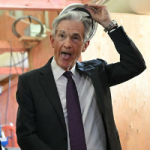
 The current standoff between Federal Reserve Chair Jerome Powell and President Donald Trump has reached a critical point.
Trump is advocating for a reduction in interest rates to help the U.S. government minimize its debt financing expenses. Conversely, Powell believes it is wise to wait and observe how tariff policies affect consumer prices before making any decisions regarding rate changes.
From July to September, the U.S. Treasury plans to borrow over $1 trillion in privately held net marketable debt, followed by an additional $590 billion from October to December. While lower interest rates could ease the burden of financing this new debt for Uncle Sam, they may also lead to some unintended negative outcomes.
For one, lower interest rates tend to fuel more borrowing. Given that the national debt stands at $37 trillion and is expected to soar to $60 trillion or more before 2050, increasing additional borrowing could have dire long-term consequences for the U.S. government.
If Congress genuinely prioritized the future of America and the younger generations who will bear the weight of this debt, a balanced budget or even a surplus aimed at debt reduction would be ideal. Instead, Congress seems to be accelerating towards a fiscal cliff. Continue reading
 The major stock market indexes are pushing toward new all-time highs, with the S&P 500 rising by 8.43 percent year-to-date, and the NASDAQ climbing 9.22 percent during the same period.
The tariff-related fluctuations of early April have surprisingly turned into a beneficial buying opportunity. Current valuation metrics, such as the CAPE ratio and the Buffett Indicator, are at historic highs, yet market participants seem unfazed.
Meme stocks are once again capturing the public’s attention. For instance, shares of Opendoor Technologies Inc. traded at an astonishing $0.51 on June 25 but soared to a temporary high of $4.97 by July 21—an increase of 874 percent—before plummeting to $2.42 by market close on July 24.
No substantial changes in Opendoor’s underlying iBuyer real estate business account for this volatility. Much like GameStop and AMC Entertainment in previous years, Opendoor has attained the status of a “meme stock,” igniting speculative enthusiasm. Continue reading
 Today, we bring you another insightful update from Joel Bowman, founder and author of Notes from the End of the World.
In his previous findings regarding President Javier Milei’s libertarian approach in Argentina, Bowman revealed a captivating narrative about the disappearing government. By cutting debt and deficits, slashing taxes, and dramatically reducing the state bureaucracy, Milei has fostered a climate of increased individual freedom and liberty. And that’s just the beginning…
In his article, Capitalism: The Enemy of Poverty, Bowman offers significant insights. Not only is Milei’s approach enhancing personal freedom, but it is also positively influencing economic growth—demonstrating that both can coexist harmoniously.
After reading this enlightening piece, if you haven’t done so already, we encourage you to visit Bowman’s website and subscribe to his newsletter. This ensures you stay updated on his latest discoveries as they unfold. Continue reading
 President Donald Trump and Treasury Secretary Scott Bessent are pushing for lower interest rates to reduce the costs associated with financing America’s enormous debt, which is expected to reach $1 trillion in net interest for the fiscal year 2025.
Despite Trump’s persistent pressures for rate cuts, Jerome Powell has resisted, preferring to wait and assess the impact of Trump’s tariff policies on consumer price inflation. Given that unemployment is relatively low, the Consumer Price Index is rising at an annual rate of 2.7 percent, and the stock market is at all-time highs, there appears to be little justification for a reduction in interest rates.
Frustrated with Powell’s resistance, Bessent recently revealed that initiatives are underway to replace Powell before the end of his term next year with a candidate willing to comply with Trump’s calls for rate reductions.
A more prudent approach to achieving lower interest rates would be to eliminate deficit spending altogether. With a balanced budget, the Treasury wouldn’t need to issue new debt but could instead manage its existing obligations. This way, the supply of Treasuries would stabilize rather than expand. Continue reading
In summary, the ongoing battle between economic policy and political pressures highlights crucial decisions that could significantly impact the nation’s financial future. As interest rates, government debt, and market dynamics interact, it remains to be seen how these discussions will unfold and their consequences for the American economy.