In an era marked by climate uncertainty and intense weather patterns, the condition of levees—those often overlooked structures designed to protect communities from flooding—has emerged as a pressing concern across the United States. In the wake of recent atmospheric river storms, the vulnerabilities of these barriers have been highlighted, shedding light on their critical role in safeguarding millions of lives and properties.
By Farshid Vahedifard, Professor of Civil and Environmental Engineering at Tufts University. Originally published at The Conversation.
Recently, powerful atmospheric river storms have impacted Washington, Oregon, and California, delivering massive amounts of rainfall. Rivers surged, leading to the overtopping and breaching of several levees—those long, often unnoticed barriers designed to hold floodwaters at bay.
Typically, levees go about their business quietly and efficiently, protecting communities year after year. However, during intense storms, their importance becomes starkly visible. They often decide whether a neighborhood remains dry or becomes inundated.
The damage observed in the West is indicative of a broader issue that has been developing for decades. Across the U.S., levees are aging while extreme weather events are on the rise. Many levees were constructed without accounting for the heavy responsibilities they now bear.
As a civil engineer at Tufts University, my focus is on water infrastructure, including the weaknesses of levees and methods to enhance their resilience. My research indicates that when levees fail, the repercussions are not distributed evenly among the population.
How Levees Became Essential Infrastructure
Many believe that levees were built as part of sophisticated flood-control systems, but their origins are far more humble.
Years ago, farmers constructed simple earthen embankments to shield their crops and livestock from seasonal floods. These primary levees were practical responses shaped by necessity, rather than crafted according to formal engineering principles. They lacked rigorous design standards and consistent maintenance protocols.
As time passed, neighborhoods expanded into areas that were once farmlands. Roads, railways, factories, and ports encroached upon flood-prone zones. What began as modest local barriers morphed into the first line of defense for millions of residents in homes and workplaces.

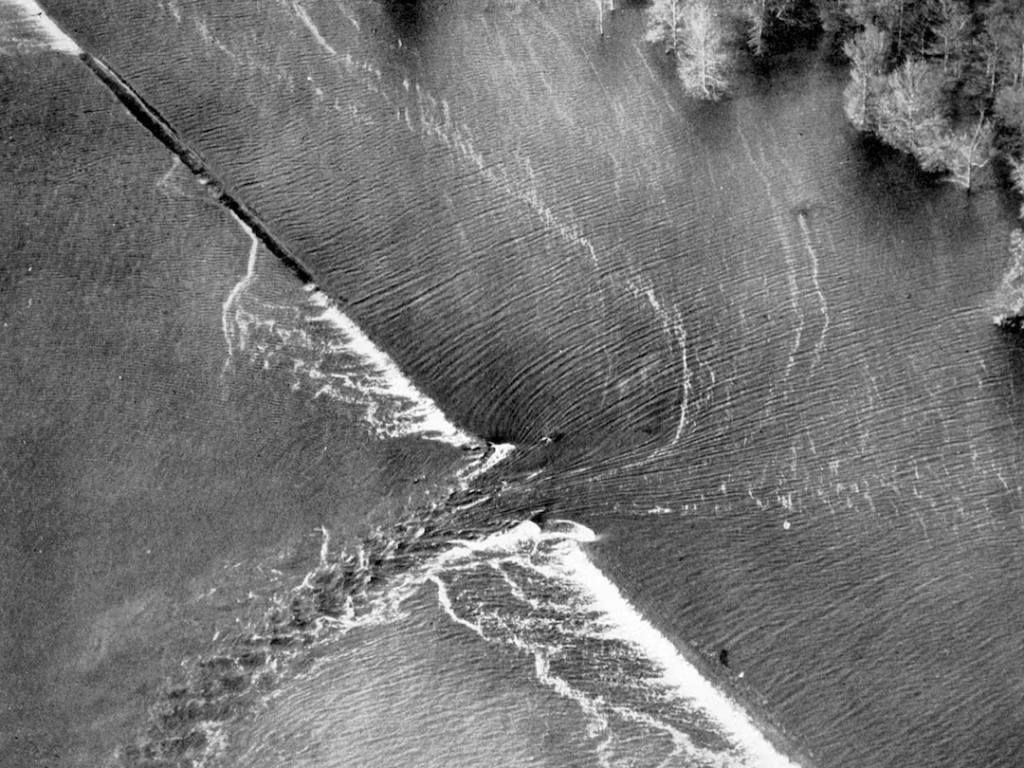
The Great Mississippi Flood of 1927 saw the river overflow and breach levees, flooding thousands of square miles. Both overtopping and breaches are visible in this historic photo. National Weather Service Archival Photography by Steve Nicklas, NOS, NGS
Without extensive public discourse or planning, these semi-engineered levees assumed a vital yet unintended role. The lingering question remains: Were they ever truly equipped for such a responsibility?
Aging Levee Systems Facing New Challenges
According to the National Levee Database, over 24,000 miles (38,600 kilometers) of levees exist in the U.S., averaging about 61 years in age, many of which are significantly older. Together, they provide protection to more than 23 million people, around 7 million structures, and nearly $2 trillion in property value.
This represents an extraordinary burden for a system that often suffers from inconsistent maintenance and oversight. While some levees undergo regular inspections, others are owned by small local agencies or private groups that struggle with limited funding. In certain instances, jurisdiction and responsibilities remain unclear.
For example, a levee breached along the Green River in Washington during storms in December 2025 had been overdue for repairs for years, with local governmental disagreements delaying necessary action, as reported by The Seattle Times. This breach prompted the evacuation of thousands of residents.

A map displays states with at-risk levees. In red are all levees in the U.S. National Levee Database, while blue highlights 478 levee segments that have experienced overtopping in the last 15 years. S. Flynn, et al., 2025
The American Society of Civil Engineers’ 2025 Report Card for American Infrastructure, which I contributed to, assigned a D-plus grade to the nation’s levees due to aging infrastructure, inconsistent monitoring, and sustained underfunding. A new dataset compiled by my colleagues and me details levee damage and includes 487 instances of overtopping where rivers overflowed levees within the past 15 years. This does not imply failures across the board; rather, it emphasizes that many levees operate with minimal safety margins.
Understanding Levee Failures
Levee failures are rarely the result of sudden collapses; they often begin subtly.
The primary cause of levee failures is overtopping, which occurs when water from a river, stream, or lake behind the levee flows over the top. This initiation can lead to erosion on the landward side, compromising the structure’s integrity. What begins as a minor overflow can rapidly escalate into a significant breach, allowing water to flood in.

An illustration contrasts overtopping and breaches, along with reasons for levee failures. S. Flynn et al., 2025
Atmospheric river storms exacerbate the risk of overtopping and breaches. These storms can produce vast amounts of rain across extensive areas in just hours, often accompanied by snowmelt. Rivers rise rapidly and can remain elevated for extended periods. Many levees were never built to withstand such sustained pressure.
When a levee breaches, flooding can be swift and severe, leaving little time for residents to evacuate, with damage that can extend far beyond the initial floodplain.
The Communities Dependent on Levees
Millions of Americans live and work in regions protected by levees, often without realizing it. Schools, highways, railways, ports, and energy facilities depend on the structural integrity of these systems.
A recent national study found that urban development in floodplains surged more than twice as fast after levee construction compared to nearby areas, illustrating how levees can alter perceptions of risk within communities.
In fact, when levees fail, flooding can be more severe than in regions without levees due to the rapid influx of water and slow drainage.
The risks are also disproportionately distributed, influenced by historical, economic, and policy factors.
This reality was painfully demonstrated during a March 2023 atmospheric river storm when a levee along the Pajaro River in California failed, flooding the town of Pajaro, largely inhabited by low-income farmworkers. Floodwaters forced hundreds to evacuate, with some residents trapped as levels rose.
What made this disaster especially striking was what followed. Officials and engineers had been aware for years of the vulnerabilities present in the Pajaro River levee. Reports highlighted its weaknesses, yet repairs were continually postponed.
Investigations by The Los Angeles Times and public records revealed that financial issues were a significant factor. Decision-makers failed to prioritize the levee system protecting this economically disadvantaged community. The risk was acknowledged, but protection was set aside.
Pajaro is not an isolated incident. Nationwide, marginalized communities and communities of color are often more reliant on older, less maintained levees or those outside major federal programs. Rural areas may depend on agricultural levees, while urban neighborhoods might rely on structures intended for much smaller populations.
When levees fail, the ramifications extend far beyond flooding, disrupting transportation, cutting power, contaminating water supplies, and altering lives for years.

Disparity highlights the percentage of residents in each state protected by levees who are classified as disadvantaged, using the U.S. Council on Environmental Quality’s Climate and Economic Justice Screening Tool. All levees in the National Levee Database are included. F. Vahedifard et al., 2023
Why This Moment is Crucial
Recent advancements in engineering, monitoring, and risk assessment have enhanced our ability to evaluate and design levees.
The events surrounding Hurricane Katrina in 2005 acted as a wake-up call when its storm surge broke through levees protecting New Orleans, leading to the deaths of hundreds due to flooding. This disaster unveiled the severe consequences of negligence and fragmented responsibility for levee maintenance.
However, there has also been meaningful progress. Over the last two decades, significant federal investments have improved the condition and management of many levees across the nation, particularly thanks to the efforts of agencies such as the U.S. Army Corps of Engineers.
Yet, the legacies of past decisions linger, and climate change is amplifying risks. Increased rainfall, swift snowmelt, and rising sea levels are pushing water control systems beyond their intended design limits. Events previously considered rare are now becoming more common.
As atmospheric rivers challenge levees in the West and flood risks increase nationwide, the issue transcends technicalities. It revolves around how society values protective measures, communicates risks, and makes decisions about who deserves safety.
Levees will remain crucial in protecting communities. Understanding their history and limitations is vital as we face future storms.
