The debate surrounding whether cars can be classified as art is a recurring theme. However, when we consider the blend of design, engineering, and passion, it’s evident that certain cars have transcended their functional purpose to become icons. But what exactly defines an iconic design? It typically involves time, patience, and a bit of serendipity. These vehicles were not initially created with the intention of becoming legendary; they simply evolved into that status.
This article highlights some of the most exceptional car designs in history, exploring the reasons they earned a place on this esteemed list.
1974 Lamborghini Countach
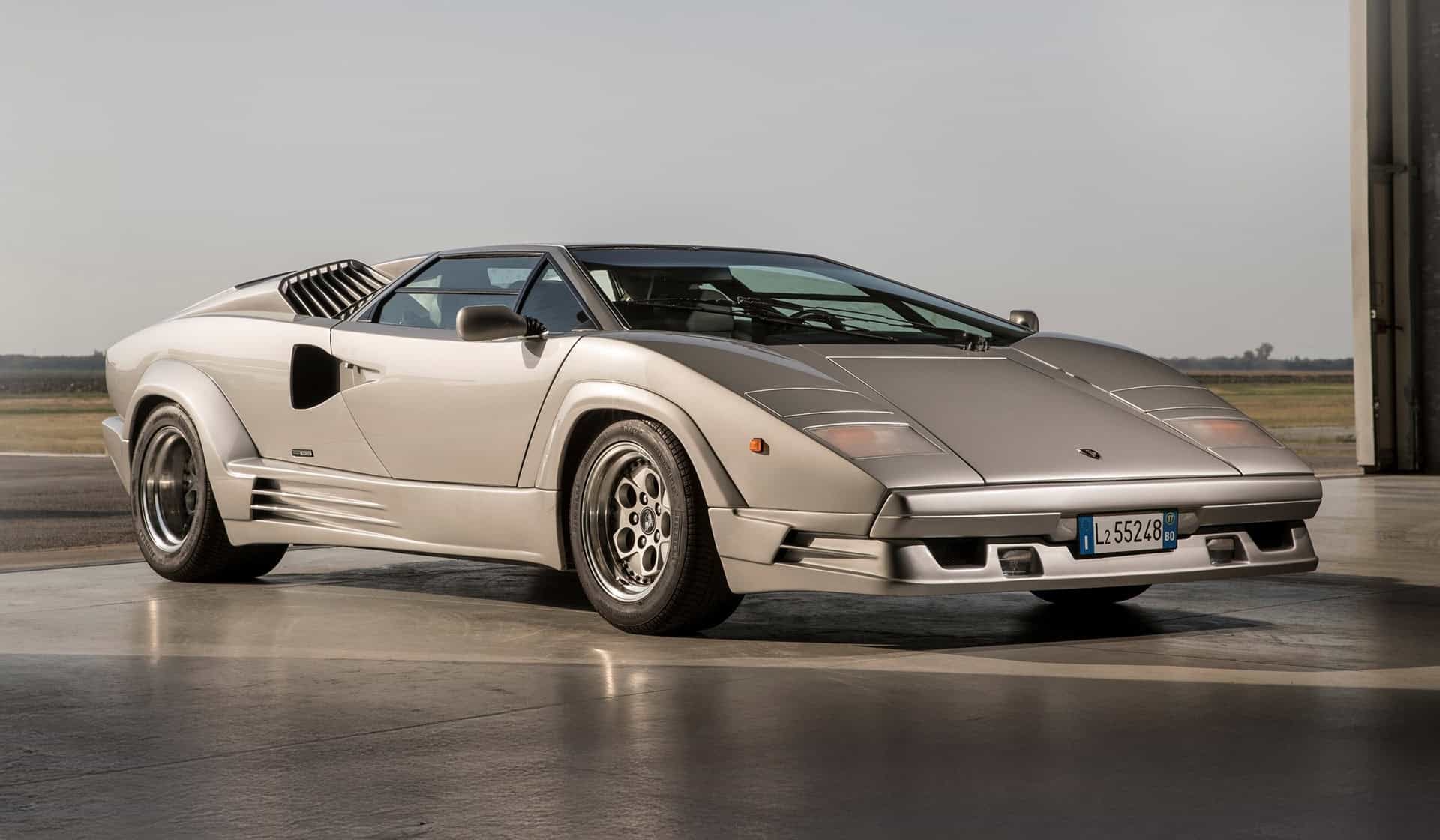
When you think of a supercar, the Lamborghini Countach likely springs to mind. The mid-engined layout, low profile, angular lines, and futuristic details we now see as standard were pioneered by a group of imaginative and determined Italians. The Countach LP400 embodies Lamborghini’s audacious spirit, while the Miura set the groundwork for this revolution in car design. Sultry and innovative, the Miura was crafted by a fantastic team of designers, engineers, and test drivers. However, the Countach took those designs and catapulted them into new dimensions—stylistically, that is.
Marcello Gandini was instrumental in the design of both vehicles. Though there was contention over which model to highlight, the Countach emerged victorious for pioneering a fresh approach to automotive design. While the Miura refined familiar elements, the Countach discarded them and ventured into uncharted territory. Its impact? Indelible.
1955 Citroën DS
Creating groundbreaking innovation for everyday vehicles poses a far greater challenge than it does for high-end supercars. Citroën achieved this with the 1955 DS, a four-door saloon that redefined aerodynamic principles and integrated cutting-edge technology, introducing numerous world-firsts in terms of luxury and safety features.
At first glance, the DS appears astonishing, especially considering its mass production began in 1955. With a shark-like nose and intricate metalwork, it stood out distinctly against the more conservative front-wheel-drive saloon designs of the time. Even details such as the high-mounted indicators on the C-pillar and the elegant integration of the chrome bumpers added to its otherworldly allure.
Underneath, Citroën introduced hydro-pneumatic suspension that not only allowed for adjustable ride height but also offered unmatched luxury in driving comfort. Remarkably, the DS could continue operating after a tire puncture, famously aiding Charles de Gaulle in evading an assassination attempt. So, it was not just beautiful; it was exceptionally clever too.
1946 Pininfarina Cisitalia 202
The Cisitalia 202 is arguably the forefather of modern car design, created by Pinin Farina himself. While it may lack the accolades of a Ferrari or Lamborghini, it set the standard for high-end sports and GT car design. The 202’s forward-thinking aesthetic seamlessly melded the wings, bonnet, and cabin into a continuous form, moving away from the disjointed appearance of earlier models.
This innovative silhouette introduced what would become the defining proportions of GT cars: a cab-rearward stance, pronounced wheel arches, and a tapering rear. Elements introduced by the Cisitalia still influence front-engine sports cars today.
While its Fiat-based four-cylinder engine may not have lived up to its stunning looks—operating more like a pre-war engine than a post-war one—its design qualities were truly groundbreaking.
1959 Morris Mini Minor
Separating design from mere styling, it’s essential to acknowledge the monumental impact of the original Mini on automotive aesthetics. The 1959 Morris Mini Minor, envisioned by Sir Alec Issigonis, revolutionized vehicle packaging by pioneering a transverse engine layout with a gearbox beneath.
This ingenious configuration enabled Morris to fit four practical seats into a car just over 3 meters long. By incorporating innovative suspension and differential layouts, it provided a solution to the 1950s fuel crisis with a small, efficient vehicle that did not sacrifice usability.
However, the true magic of the Mini extended beyond its compact design; it offered an engaging driving experience with nimble handling and a character that elevated practicality into iconic status. It wasn’t merely a mode of transportation; it was a lifestyle companion.
1974 Volkswagen Golf Mk1
When Volkswagen sought to replace the Beetle, they turned to renowned designer Giorgetto Giugiaro. The result was the 1974 Golf Mk1, which transformed the quirky rear-engine layout into a contemporary front-engine, front-wheel-drive configuration.
Simplicity, elegance, and timelessness were key aspects, and Giugiaro delivered flawlessly. His pristine, angular lines combined with the practical hatchback form established a new standard. The Golf was much more than a replacement for the Beetle; it represented a comprehensive reset that has sustained its legacy through generations.
The introduction of the GTI further elevated the Golf’s profile, transforming this unpretentious family hatch into a performance-oriented icon. With only subtle tweaks, it achieved a cult classic status, proving that practicality can coexist comfortably with performance.
1999 Audi TT
What does it take to craft a new icon in the modern era? Audi’s answer was the TT Coupe. Launched in 1999 and based on the Golf platform, the TT manifested a design statement from front to back. It elegantly fused futuristic minimalism with nostalgic elements, all encapsulated in an almost architectural shape.
Designed by Freeman Thomas and supervised by Peter Schreyer, the TT’s appeal extends beyond its aesthetic—though the circular motifs, sleek curves, and simplified details undoubtedly add to its charm. The coherence of its design, from the wheels to the interior vents, made it feel like a concept car that had successfully transitioned onto the road.
Despite its arrival marking the beginning of a decline in the coupe market, the TT left an enduring mark, setting a standard that even its successors have found challenging to match.
1984 Mercedes-Benz W124
Initial impressions might not label the W124 as an icon, yet the man behind its design, Bruno Sacco, played a crucial role in defining a category. The W124 sat comfortably between the compact 190 and the prestigious S-Class, carefully balancing both ends.
This model essentially birthed the modern executive saloon, boasting impeccable proportions, understated detailing, and a road presence that was hard to ignore. It looked good in every color and body type—saloon, coupe, estate—and has aged with remarkable elegance.
While the BMW 5 Series leaned towards sportiness, the W124 epitomized sophistication, establishing a subtle confidence that would become synonymous with Mercedes-Benz for decades to come.
2002 BMW 7 Series (E65)
BMW’s design direction has been a hot topic over the years, with no model sparking more debate than the E65 7 Series. Under the guidance of Chris Bangle and designed by Adrian van Hooydonk, it replaced the refined E38 with a daring new look.
The E65 was polarizing upon its launch, especially due to its unconventional rear. However, a closer examination reveals that it introduced bold surfacing, unique proportions, and an unmistakable stance. Every detail, color choice, and curve was meticulously crafted, even if not universally praised.
This model marked a pivotal shift in BMW’s design philosophy, heralding a new era of assertive style. Whether one liked it or not, it was undeniably impactful.
1990 Renault Twingo
When Patrick Le Quément set out to design the Twingo, the objective went beyond just making an economical vehicle; it was about instilling a sense of joy. The result was a design that resonated with people like few cars have.
Every aspect was crafted for simplicity and joy: the playful front, compact proportions, vibrant color palette, and a clever, minimalist interior. While it was produced on a budget, it never felt lacking.
The Twingo’s cheerful appearance was more than a metaphor; it evoked character and charm across urban landscapes, showcasing that affordability and enthusiasm can indeed coexist.
2003 Renault Mégane II
Continuing with Renault—specifically the work of Patrick Le Quément—the Mégane II emerged from a bold reimagining of a typically conservative segment. This was no ordinary hatchback; it was a declaration of design freedom.
While competitors played it safe, Renault embraced sharp angles, striking graphics, and a memorable rear end. The three-door variant, in particular, boasted a unique silhouette that captured attention on the road as well as in the mind.
The Mégane II proved that mainstream cars didn’t have to conform to boredom and that flair in design could be a staple, not just a rarity. Just like flared jeans and the Spice Girls, it encapsulated its era—and that holds a certain value.