Artificial Gravity in Space: An Exploration of Feasibility and Necessity
Astronauts face numerous health risks during extended spaceflights, primarily due to prolonged exposure to microgravity. This condition can adversely affect vision, bone density, muscle function, and overall physical wellbeing. A potential solution to this problem is the concept of artificial gravity, which aims to recreate conditions similar to Earth’s gravity within spacecraft—much like the rotating ring depicted in Stanley Kubrick’s “2001: A Space Odyssey.”
Current State of Artificial Gravity Research
Torin Clark, an aerospace engineering professor at the University of Colorado Boulder, believes that creating artificial gravity is technically feasible in the near future. In fact, the concept has almost been realized before; the Centrifuge Accommodation Module was planned for the International Space Station (ISS) but was cancelled in 2005 due to budget constraints.
Ana Diaz Artiles from Texas A&M University notes that interest in artificial gravity fluctuates, often driven by funding opportunities and research cycles. However, despite agreeing on its potential benefits, researchers face significant challenges in implementing this technology. Key questions arise, such as how much gravity is necessary, the dimensions of the required device, and the duration and type of gravitational force needed.
Methods for Creating Artificial Gravity
Researchers have identified three primary approaches to generating artificial gravity:
-
Rotating Large Structures: The classic science fiction approach involves spinning massive structures, such as a large ring, to create artificial gravity. This method requires a long radius, reducing the necessary spin speed to generate the desired gravitational effect, but poses logistical challenges in terms of assembly in space.
-
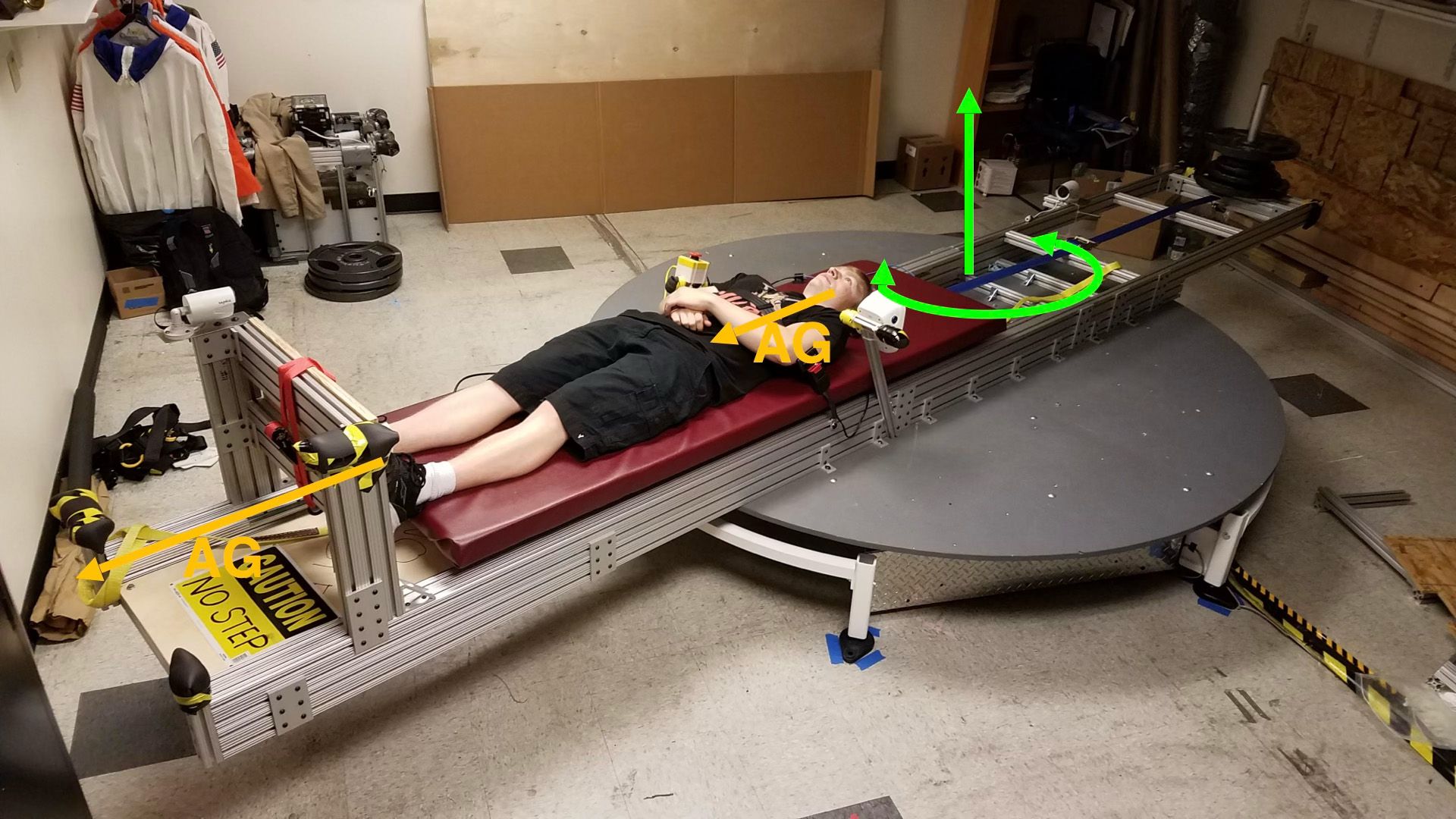
Short-Radius Centrifuge: A more practical, short-radius centrifuge could simulate gravity over limited periods. This involves a spinning tube, typically a few feet in diameter, where astronauts are subjected to centrifugal force. While more feasible, the use of a centrifuge might be likened to an exercise device, requiring astronauts to spend time within it regularly.
-
Linear Acceleration: This method would see spacecraft continuously accelerating in one direction to mimic gravitational effects, akin to the sensation of being pressed back into a car seat during acceleration. However, it necessitates a propulsion system capable of continuous thrust, which currently presents engineering challenges.
Health Implications and Future Directions
Current research suggests that various durations and levels of simulated gravity could mitigate health issues associated with long-term microgravity, such as bone and muscle loss. Studies conducted on individuals in head-down tilt positions indicate that even short sessions in a centrifuge can help maintain muscle function, yet they remain inconclusive regarding the optimal parameters for efficacy.
The road to applying artificial gravity in space is not merely a matter of technology. It also encompasses a deeper understanding of human physiology in adaptations to microgravity, as well as securing appropriate funding and resources to expand research efforts.
In summary, while the technology to implement artificial gravity exists, ongoing research and investment are crucial to address the unanswered questions regarding its effectiveness and practical application. As the quest for human exploration in space continues, understanding and optimizing artificial gravity could transform life aboard future long-duration missions.


